

A full-scale nuclear emergency exercise will take place on Octber 29 & 30, and you can take part. In addition to taking part from home, we will also need operators at various Emergency Operation Centres and other locations for all or part of each day. You can find out more and let us know if you want to take part.
Network configuration changes
New network diagrams are available with all new repeaters and zones indicated, available at the “Network” tab. Members can access the same map, but including current linking codes on the “Linking” tab which only appears when logged-in.
Effective July 12, changes to IRG repeater Zones have been made as part of the upgrade of equipment. Significant changes include:
All IRG repeaters now fully tone-enabled
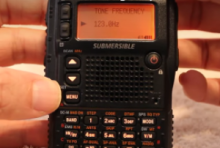
With the Doaktown VE1XI repeater being the final one updated, all IRG repeaters are now tone-enabled. Users are required to program a sub-audible tone with their transmission to activate a repeater. For more information, see our Revamp page.
All IRG VHF repeaters use a CTCSS (or PL tone) of 151.4 Hz, while IRG UHF repeaters use 141.3 Hz. You can check the complete updated repeater listing by clicking on the “Revamp” tab at the top of any page.
CubeSat VIOLET deployed, awaiting first signal

CubeSat VIOLET was deployed from the ISS last week, but its antenna may not yet have released. Attempts to contact from the UNB team will be made periodically. The orbit of VIOLET at this time is very close to the ISS, so you can find out when VIOLET may be within range at Heavens Above web site (you may need to adjust for your location, and be sure to select "all passes".). UNB will be using 145.910 (only 6 watts pointed
Win a LaCrosse weather station
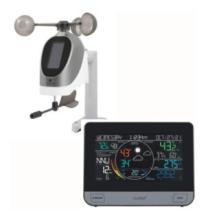
Update! The winner of the draw for the new LaCrosse weather station was VE9GM, Gino Mazerolle of Drummond, NB. Congratulations, Gino! Thanks to all who participated, and keep on providing those observations.
To celebrate the 30th Anniversary of the WeatherNet, Scott VE1CSA and Rick VE9MTB want to thank everyone who’s checked in over the years allowing the reporting of over 600,000 pieces of data to the Atlantic Storm Prediction Center.
Progress chart of CTCSS tone implementation
This chart will show which repeaters have been updated for CTCSS tones. Most repeaters are now transmitting a sub-audible tone if you wish to set "tone squelch" on to reduce any local interference. Repeaters showing set to "TX" are sending the tone out; those set to "RX" need you to send the tone to transmit through the repeater.
East Zone repeaters now tone-enabled
As of Monday, December 4, the East Zone repeaters are fully CTCSS enabled - users will need to use a PL tone of 151.4 Hz to transmit via these repeater. This includes Moncton VE1MTN (147.090 +), Acadieville VE9ACD (145.430 -) and Sackville VE9SKV (145.230 -). For a full list of updated repeaters, visit the IRG revamp page.
Student “makers” share some soldering resources

We recently got a great note from Grace Coleman, activity director for a school Technology Club in New Hampshire, who wanted to share some information from one of their student volunteeers:
Upgrades coming - Week of July 17
Three more repeaters will be upgraded to require CTCSS (PL tones) during this week:
- VE9VDR 147.390 - Seven Mile Ridge / Campbellton - 151.4 Hz
- VE9ELM 145.410 - Elmtree / Belledune - 151.4 Hz
- VE1BRD 147.315 - Allardville / Bathurst - 151.4 Hz
You will need to program your radio to transmit the PL tones shown above in order to be heard when using the repeater after this change is made. You can add the PL tone prior to the change if you wish. Consult your radio manual for help.
The phase-in of CTCSS is part of the ongoing upgrade of the IRG system underway. For more information:
IRG system upgrade and changes coming | Up-to-date chart of upgraded repeaters | The future is sub-audible tones
IRG upgrade - July update
Earlier this spring, we notified all our contacts that changes were coming to the IRG repeater system. Here is the latest news.
Details of work completed to date:
- April 2023:
- Three additional UHF stand-alone repeaters activated:
- 442.025 (+) CTCSS= 141.3 on RX and TX - Fredericton VE1BM site
- 443.400 (+) CTCSS = 141.3 on RX and TX - Pleasant Ridge VE1BI site
- 442.500 (+) CTCSS = 141.3 on RX and TX - Saint John VE9STJ site
- Three additional UHF stand-alone repeaters activated:
- April 2023:
- Automatic timed repeater IDs - disabled on April 27, 2023.
- Clock time adjusted.
- June 2023:
- As of June 26, all repeaters are now transmitting CTCSS (PL tones);
- 151.4 on VHF sites
- 141.3 on UHF sites
- VE9GMI reactivated, now on Campobello Island on 146.955 (-) with CTCSS 151.4 Hz enabled on both RX and TX. This repeater is stand-alone at this time, to be linked to South West Zone soon.
- VE9MBY repaired at Maces Bay 444.875 (+) with CTCSS 141.3 Hz enabled on both RX and TX.
- Audio drop-out issue repaired on Stanley Zone (VE9NRV and VE9GLA)
- As of June 26, all repeaters are now transmitting CTCSS (PL tones);
Special thanks go out to Gino VE9GM and Nick VE9MP and DTI Radio Communications Branch for all the extra work involved in this upgrade.
Time to get ready for CTCSS (PL tones)
As mentioned above, all repeaters are now transmitting CTCSS (PL Tones), and two (Campobello and Maces Bay) also now require you to transmit CTCSS to operate. Also, the three new UHF repeaters also require CTCSS. Check your radio manual to find out how to "turn on" your CTCSS (PL tone). We recommend that you learn how to program your often-used frequencies along with the new CTCSS to memory channels - it will save you lots of time in the future.
The tones to program are 151.4 for the VHF repeaters, and 141.3 for the UHF repeaters.
There is no harm in setting up your radio now to transmit with the tone "on", even before your local repeater is upgraded to require it.
So, get out your manuals and program your memory channels to include CTCSS before it's too late!
We'll produce a new repeater directory when all the changes are implemented, but in the meantime, here is a list of all the repeaters and the CTCSS tones now in effect. For the rationale and a complete summary of all the changes planned, visit this page: IRG system upgrades and changes coming.
We'll keep you updated as things go along via future postings and on regular nets , so stay tuned!